
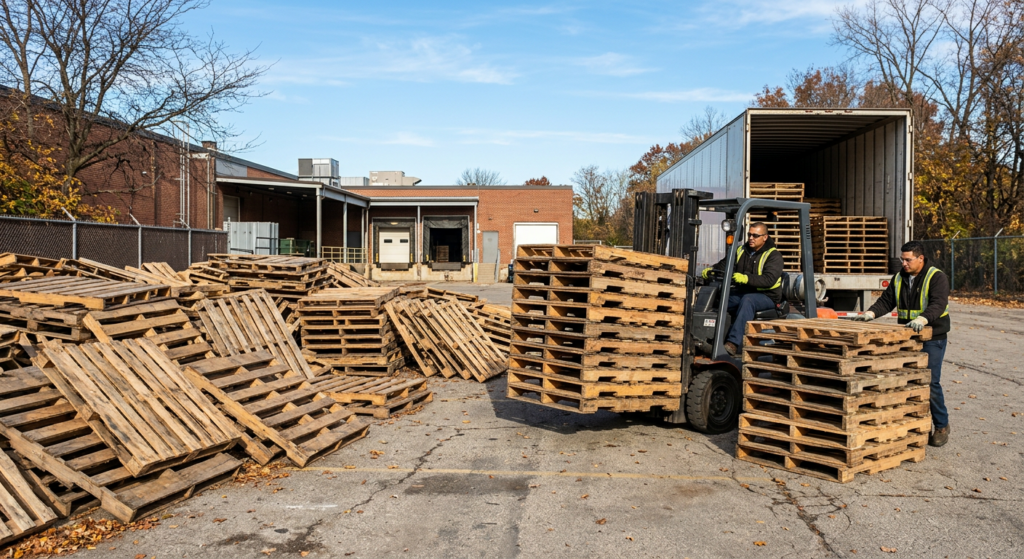
Every fall, businesses across Lansing start prepping for winter. Furnaces get serviced, walkways get salted, and snowplow contracts get signed. But there’s one thing that gets overlooked almost every single year, and it sits right outside the back door. Empty pallets.
At Lansing Junk Removal, we have seen what happens when those forgotten stacks of wood meet a Michigan winter, and it’s rarely pretty. Getting pallet removal handled before the first snowfall isn’t just about tidiness. It protects a company’s property, its people, and its bottom line.
Snow Turns Pallet Piles Into Safety Hazards
A stack of pallets in October looks harmless enough. Add six inches of snow and a layer of ice, and that same stack becomes a genuine liability. Snow hides broken boards, protruding nails, and uneven edges. Employees hustling through a loading dock or delivery drivers cutting across the lot can’t see what’s under their feet.
Slips, trips, and falls spike dramatically during winter months, and cluttered exterior areas make things worse. The Occupational Safety and Health Administration offers detailed guidance on winter weather hazards in the workplace, and clearing walking surfaces of obstructions sits near the top of the list. A frozen pallet with a snapped runner sticking out at ankle height is exactly the kind of obstruction that sends someone to urgent care.
Workers’ Comp Claims Nobody Wants
One injured employee can cost a business thousands in claims, lost productivity, and paperwork headaches. Compare that to the modest cost of professional junk removal in the fall, and the math gets simple fast.
Frozen Pallets Are Harder and More Expensive to Remove
Here’s something a lot of business owners don’t realize until it’s too late. Once pallets freeze to the ground or get buried under compacted snow, removing them becomes a whole different job. Wood soaks up moisture, freezes solid, and essentially glues itself to asphalt and concrete. Crews end up chipping away at ice just to pry the bottom layer loose.
That extra labor means extra time on site, and extra time usually means a bigger bill. Waterlogged pallets also weigh significantly more than dry ones, which affects hauling capacity and disposal costs. Scheduling commercial pallet pickup in the fall, while everything is dry and accessible, keeps the job quick and the price down.
Winter Scheduling Gets Tight Too
Junk haulers stay busy year-round, but winter throws curveballs. Snowstorms delay routes, short daylight hours compress schedules, and icy access roads slow everything down. Businesses that book removal in autumn get faster service and more flexible appointment windows. Those who wait until January often find themselves at the back of the line.
Pallet Stacks Invite Pests Looking for Winter Shelter
When temperatures drop, mice, rats, and other critters go hunting for warm, dry hiding spots. A pile of pallets against a building wall is basically a rodent condominium with a welcome mat out front. The gaps between deck boards offer perfect nesting cavities, and snow cover adds insulation on top.
Once pests settle in next to a building, it doesn’t take long for them to find a way inside. Restaurants, food distributors, and warehouses face serious consequences if an inspector spots evidence of rodent activity. Even offices and retail shops deal with chewed wiring, contaminated storage areas, and unhappy customers.
Moisture Damage Compounds the Problem
Beyond pests, pallets trapped under snow all winter rot from the inside out. By spring, that stack of “reusable” pallets has turned into a moldy, splintered mess that no recycler wants. Businesses lose whatever resale or reuse value those pallets had, and they still have to pay for disposal. Acting before the snow flies preserves options.
Clear Lots Make Snow Removal Faster and Cheaper
Anyone who’s paid for commercial snowplowing knows the drill. Plow drivers charge for time, and obstacles slow them down. Pallet stacks force plows to maneuver around them, leaving pockets of unplowed snow that harden into ice ridges. Those ridges block parking spaces, trap delivery trucks, and stick around until March.
Some plow contractors even charge extra for lots cluttered with obstructions, or they simply skip those areas entirely. A clean, open lot gets plowed edge to edge in one smooth pass. Removing pallets ahead of the season means better snow service, fewer ice patches, and a parking lot that actually works for customers and staff all winter long.
Curb Appeal Matters Even in December
Snow-covered junk still looks like junk. Customers pulling into a lot notice sagging, half-buried pallet piles, and it shapes their impression of the business before they walk through the door. A tidy exterior signals a company that pays attention to details.
How Lansing Junk Removal Handles Fall Pallet Cleanouts
Lansing Junk Removal works with warehouses, retailers, restaurants, and contractors throughout the greater Lansing area to clear out pallet accumulations before winter sets in. The process is straightforward. A crew shows up on schedule, loads everything, sweeps the area, and hauls it all away. Usable pallets get routed to recyclers whenever possible, keeping wood out of the landfill.
Whether it’s a dozen pallets behind a storefront or several hundred stacked beside a distribution center, the team handles jobs of every size. Fall appointments fill up quickly as businesses race to beat the first storm, so booking early pays off.
Michigan winters don’t negotiate. The snow is coming whether that pallet pile is dealt with or not. Businesses that schedule professional pallet removal now head into the season with safer lots, happier plow drivers, fewer pests, and one less thing to worry about when the flakes start falling. Those looking to get ahead of the weather can reach out to Lansing Junk Removal for a free quote and a firm spot on the fall calendar.