
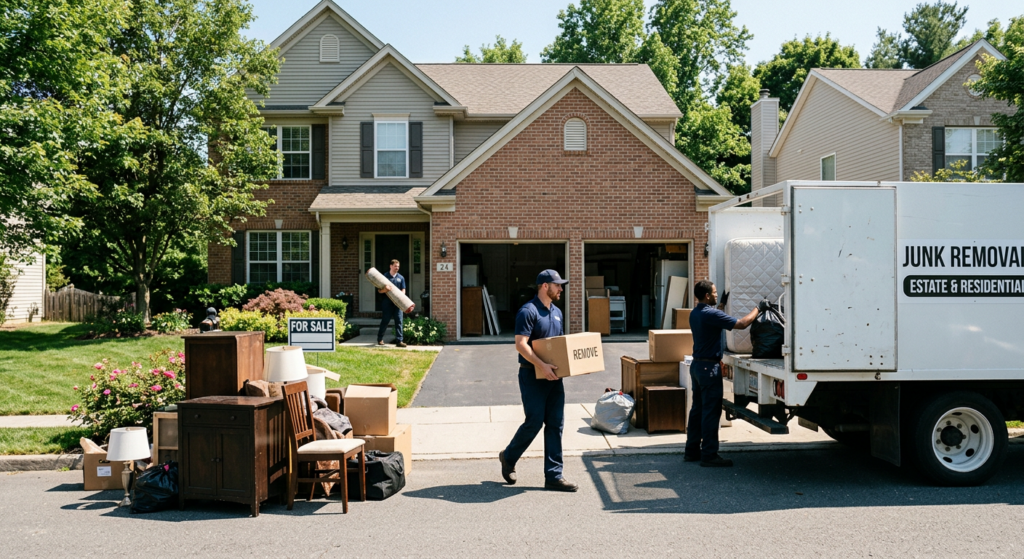
When a property is headed for sale, the estate appraisal is one of the biggest moments in the process. It sets the number everything else revolves around. What many businesses, executors, and property managers don’t realize is that the condition of the property on appraisal day can influence how smoothly that process goes. That’s where real estate junk removal comes into play, and timing it correctly makes all the difference. As the owner of Lansing Junk Removal, John has walked hundreds of clients through this exact scenario, and the same questions come up every time. When should the junk go? What should stay? And how do you avoid accidentally hauling away something valuable?
Why Timing Matters More Than Most People Think
An appraiser’s job is to evaluate the property itself, not the belongings inside it. In theory, a cluttered house should appraise the same as an empty one. In practice, things get complicated. Rooms packed floor to ceiling with boxes make it difficult for an appraiser to verify square footage, inspect flooring, or spot structural details. If they can’t see it, they can’t assess it accurately, and that uncertainty rarely works in the seller’s favor.
On the flip side, clearing a property too aggressively before an appraisal creates its own headaches. Estates often contain items that need to be professionally valued before anything leaves the building. Antique furniture, artwork, tools, and collectibles can carry real money, and once they’re gone, they’re gone.
The sweet spot sits between those two extremes. Remove the true junk, keep the potentially valuable items in place, and give the appraiser a clean, accessible property to walk through.
The Right Order of Operations
Businesses handling estate sales, probate properties, or commercial liquidations benefit from following a clear sequence. Skipping steps or reversing the order is where costly mistakes happen.
Step One Involves Sorting Before Anything Moves
Before a single item hits a truck, someone with authority over the estate should walk the property and separate belongings into categories. A simple system works best:
- Keep — items heirs or stakeholders want to retain
- Appraise — anything that might hold value, even if it’s uncertain
- Donate — usable items with no significant resale value
- Remove — genuine junk, damaged goods, and debris
When in doubt, an item belongs in the appraise pile. A qualified personal property appraiser, such as one credentialed through the Appraisal Institute, can confirm whether that dusty painting in the basement is a garage-sale find or a genuine asset of the estate.
Step Two Covers the Personal Property Appraisal
If the estate contains items of potential value, schedule the personal property appraisal before any large-scale cleanout. This is separate from the real estate appraisal, and confusing the two trips up a lot of first-time executors. The personal property appraiser evaluates the contents. The real estate appraiser evaluates the building and land. They serve different purposes and usually happen on different days.
Step Three Brings in the Junk Removal Crew
Once valuables are documented and either removed or set aside, the junk removal company comes in and clears everything designated for disposal. A good crew can empty a three-bedroom estate home in a day or two, hauling away furniture, appliances, yard waste, and the accumulated odds and ends of decades. This step should wrap up at least a few days before the real estate appraisal so there’s time to handle any surprises, like debris hidden behind stacked boxes or a crawl space nobody checked.
Step Four Ends With the Real Estate Appraisal
With the property cleared, the appraiser gets full access to every room, closet, and corner. They can measure accurately, note the condition of finishes, and complete their report without guesswork. Sellers who follow this order consistently report smoother appraisals and fewer follow-up visits.
What Businesses Gain From a Cleared Property
Beyond the appraisal itself, a professional estate cleanout pays off in several ways that matter to companies managing property sales at scale.
- Faster listings. Photographers and stagers can get to work immediately after the appraisal instead of waiting on a cleanout.
- Fewer liability risks. Cluttered properties are trip hazards for appraisers, inspectors, and showing agents.
- Better first impressions. Buyers and their agents form opinions in seconds, and leftover junk sends the wrong message.
- Documented disposal. Reputable haulers provide receipts for donations and disposal, which helps with estate accounting and probate records.
How Lansing Junk Removal Fits Into the Schedule
Local knowledge matters here. Lansing Junk Removal works directly with estate attorneys, realtors, and property management firms across mid-Michigan, coordinating cleanout dates around appraisal appointments rather than forcing clients to work around a hauler’s calendar. The team is accustomed to flagging items that look valuable before they load them, and more than once that extra set of eyes has saved a family from tossing something worth keeping.
For businesses juggling multiple properties, the company offers scheduled recurring service and same-week availability for time-sensitive sales. Crews handle everything from single-room cleanouts to full commercial building clear-outs, including donation drop-offs and responsible recycling.
A Simple Plan Beats a Rushed One
Estate sales come with enough moving parts already. Getting the cleanout sequence right removes one major source of stress and protects the value locked inside both the property and its contents. Sort first, appraise the valuables, clear the junk, then bring in the real estate appraiser. Businesses in the Lansing area that follow that rhythm close faster and with fewer surprises. When the calendar starts filling up, a quick call to a local property cleanout specialist keeps the whole timeline on track.