
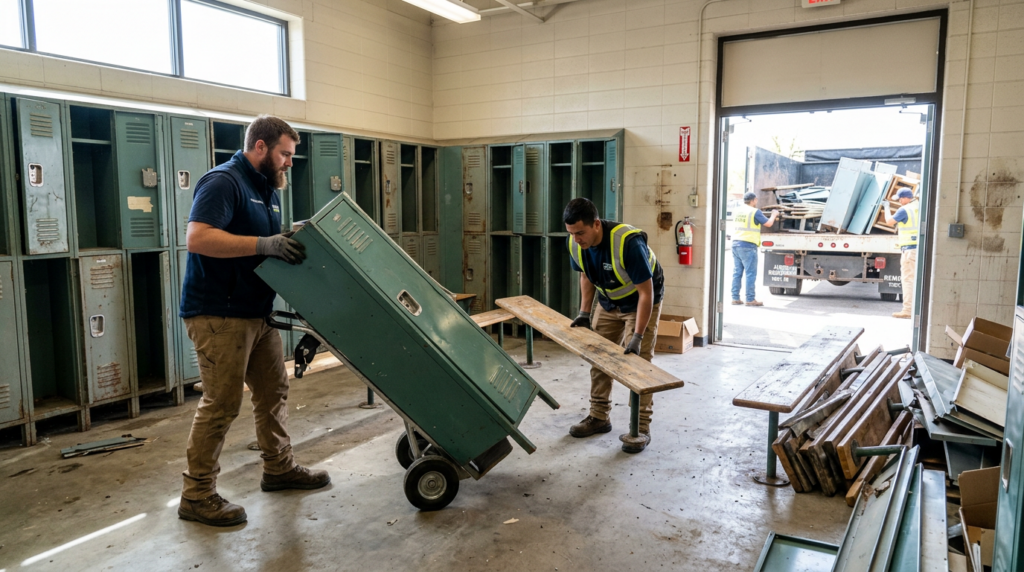
When a fitness facility in Troy decided to renovate its locker rooms last spring, the owner faced a problem most gym operators eventually run into. Rows of dented steel lockers, warped wooden benches, and a mountain of outdated fixtures stood between the business and its fresh new look. That’s where a professional junk removal crew came in, and the story of that project offers plenty of lessons for anyone staring down a similar cleanout.
Why Old Gym Fixtures Are Harder To Remove Than People Expect
Lockers look simple enough from the outside. Pull them off the wall, carry them out, done. Anyone who has actually tried knows better. Commercial lockers are typically bolted into concrete floors, anchored to wall studs, and connected to each other in long banks that can weigh several hundred pounds per section. The benches aren’t much friendlier. Many are mounted on steel pedestals set into the slab, and older wooden tops often splinter the moment someone tries to pry them loose.
At the Troy facility, the crew found lockers that had been installed in the early 1990s. Decades of humidity from the adjacent showers had rusted the anchor bolts into place. A few sections had to be cut apart with reciprocating saws before they could be moved at all. That kind of work isn’t something a gym owner wants their front desk staff attempting on a Saturday afternoon.
Hidden Hazards Behind The Metal
Old locker rooms hide surprises. Behind the units, the team discovered water damage, mold growth on the drywall, and abandoned electrical wiring from a previous renovation. Spotting these issues early gave the facility owner time to bring in the right contractors before the new lockers arrived. A rushed DIY teardown might have buried those problems behind fresh installations, only for them to resurface later.
How The Removal Process Actually Worked
The project started with a walkthrough. The crew measured the locker banks, counted the benches, and mapped out a path from the locker room to the loading area that wouldn’t disrupt members using the rest of the gym. The facility stayed open during the entire removal, which mattered a lot to the owner. Nobody wants to lose membership revenue over a renovation.
From there, the work followed a straightforward rhythm:
- Disconnection and unbolting of each locker bank from floors and walls
- Cutting oversized sections into manageable pieces for safe carrying
- Removing bench pedestals and patching-ready prep of the anchor points
- Floor protection along the exit route so the gym’s flooring survived the parade of heavy metal
- Loading, hauling, and sorting everything for recycling or disposal
The whole job wrapped up in a day and a half. Two days had been budgeted, so the owner got a head start on the new installation.
Keeping Members Happy During The Work
Noise was the biggest concern. Cutting steel isn’t quiet, so the loudest work was scheduled during the gym’s slowest hours, between late morning and early afternoon on weekdays. Signage went up a week in advance, and temporary changing areas kept members from feeling displaced. Small touches like that keep a renovation from turning into a wave of cancellations.
Where All That Metal And Wood Ended Up
Here’s something a lot of people don’t realize about commercial junk removal. Very little of what comes out of a locker room needs to go to a landfill. Steel lockers are almost entirely recyclable, and scrap yards accept them readily once they’re stripped of plastic components. The wooden bench tops from the Troy job were in rough shape, but the steel pedestals joined the lockers on the recycling run.
Recycling scrap metal isn’t just good business. It dramatically reduces the energy and raw materials needed to produce new steel. The EPA’s guidance on managing construction and demolition materials lays out just how much waste can be diverted from landfills when projects like this one are handled thoughtfully. For the fitness facility, that meant a smaller disposal bill and a renovation story they could share with environmentally minded members.
What Couldn’t Be Recycled
A handful of items did head for disposal. Rubber locker mats, cracked plastic bench caps, and the moldy drywall sections weren’t candidates for a second life. Even so, roughly 85 percent of the total haul by weight was diverted from the landfill. That number surprised the gym owner, who’d assumed everything would end up in a dumpster.
What Fitness Facility Owners Should Know Before A Cleanout
Gym owners planning a similar project can save themselves headaches with a little preparation. Photos of the lockers and benches help a junk hauling company quote accurately before anyone sets foot on site. Knowing whether the units are bolted, welded, or freestanding changes the labor estimate quite a bit. And clearing out abandoned member belongings ahead of time avoids awkward moments when a crew finds someone’s forgotten gym bag behind bank number seven.
Timing matters too. Scheduling removal a few days before new fixtures arrive leaves room for wall repairs, painting, and floor patching. Cramming everything into a single weekend rarely goes as planned.
A Job Worth Doing Right
The Troy facility reopened its locker room three weeks after the old fixtures came out, complete with modern ventilated lockers and composite benches that won’t splinter or rot. The owner later said the removal was the easiest part of the whole renovation, which is exactly how it should feel. Heavy, bolted-down commercial fixtures are a job for people with the tools, trucks, and experience to handle them. For gyms, schools, and rec centers across southeast Michigan, a reliable junk removal service turns a daunting teardown into a single line item that’s crossed off the list before lunch on day two.