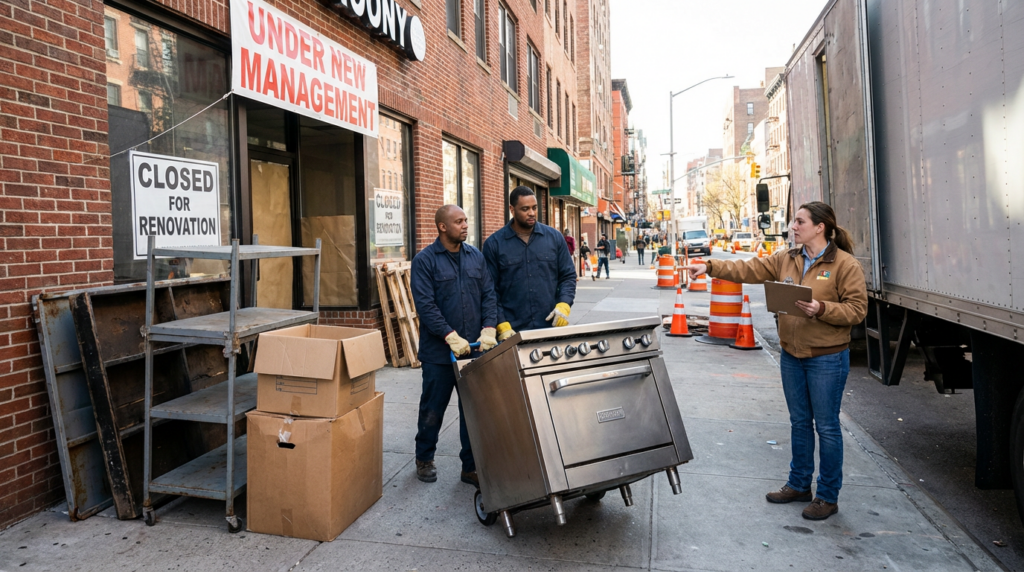
Transitioning a restaurant to new ownership represents a significant moment for all parties involved. The outgoing owner wants to leave the space in good condition, while the incoming owner eagerly anticipates making their mark. A restaurant equipment removal service can help make this transition smooth. Lansing Junk Removal specializes in clearing restaurant spaces efficiently, allowing new owners to start with a clean slate.
Why Professional Restaurant Equipment Removal Matters
Restaurant equipment is heavy, bulky, and often connected to utility lines, making removal challenging without proper experience. Professional restaurant equipment removal services bring the right tools, techniques, and teams to handle these items safely.
Old equipment can weigh hundreds or even thousands of pounds. Refrigeration units, commercial ovens, and exhaust hoods require special handling to prevent damage to floors, walls, and doorways during removal. Additionally, some equipment may contain hazardous materials that require proper disposal according to local regulations.
Safety Considerations During Equipment Removal
Restaurant kitchens contain many potential hazards during equipment removal. Gas lines must be properly disconnected, electrical systems safely decommissioned, and water lines capped correctly. Professionals understand these requirements and can perform the work while minimizing risks to the property and people.
Planning Your Restaurant Equipment Removal Process
Effective restaurant equipment removal begins with careful planning. The process should start with a thorough inventory of all items that need to be removed, sold, or transferred to the new owner.
Creating an Equipment Inventory
Before any removal begins, create a detailed list of equipment categorized by:
- Items staying with the property
- Equipment being sold separately
- Items that need complete removal and disposal
- Fixtures that require special handling
Scheduling Considerations
The timing of restaurant equipment removal matters greatly. Ideally, the process should occur during a planned transition period between ownership to minimize disruption to business operations. Most removals can be completed within 1-3 days depending on the restaurant size and equipment volume.
Options for Removed Restaurant Equipment
When clearing a restaurant space, owners have several options for handling the removed equipment:
Reselling Valuable Equipment
Quality commercial kitchen equipment often retains significant resale value. Items in good working condition can be sold to restaurant supply dealers, through online marketplaces, or to other local restaurant owners. Some restaurant equipment removal companies can help connect sellers with potential buyers.
Recycling and Donation Options
For equipment that isn’t suitable for resale but still functions, donation presents an excellent option. Many culinary schools, community kitchens, and nonprofit organizations welcome commercial kitchen equipment donations. For completely non-functional items, recycling ensures materials like stainless steel, aluminum, and copper are properly processed rather than sent to landfills.
Responsible Disposal
Some equipment contains components that require special handling for disposal. Refrigeration units, for example, contain refrigerants that must be properly recovered according to EPA regulations. Professional restaurant equipment removal services understand these requirements and ensure compliance.
Preparing the Space for New Ownership
Once equipment removal is complete, the space preparation continues to create an ideal blank canvas for the new owner.
Deep Cleaning After Equipment Removal
After years of operation, areas beneath and behind equipment often reveal accumulated grease, dust, and food debris. Professional cleaning services can address these areas, including:
- Degreasing floors and walls
- Cleaning ventilation systems
- Sanitizing all exposed surfaces
- Addressing any pest control issues
Addressing Repairs and Modifications
Equipment removal sometimes reveals damage to floors, walls, or utility connections. These issues should be addressed before turning over the space to new owners. Common repairs include:
- Patching floor holes where equipment was bolted down
- Repairing wall damage from removed fixtures
- Updating outdated electrical systems
- Ensuring proper capping of gas and water lines
The restaurant equipment removal process provides an excellent opportunity to make these repairs while the space is empty and accessible.
Documentation for New Owners
Before completing the transition, preparing documentation about the space can be incredibly helpful for new owners. This might include:
- Location of utility shutoffs
- Recent maintenance records
- Contact information for reliable service providers
- Building plans showing electrical, plumbing, and ventilation systems
This information helps new owners understand the space they’re inheriting and makes future modifications or repairs more straightforward.
Choosing the Right Restaurant Equipment Removal Service
Selecting the right partner for restaurant equipment removal can make a significant difference in how smoothly the transition goes. The ideal service provider should have:
- Experience specifically with restaurant equipment
- Proper insurance coverage
- Knowledge of local disposal regulations
- The capacity to handle large, heavy items
- Positive reviews from previous restaurant clients
Lansing Junk Removal specializes in restaurant transitions throughout the Lansing area, offering comprehensive services from equipment removal to space preparation for new owners.
By working with professionals who understand the specific challenges of restaurant equipment removal, restaurant owners can ensure a smooth transition that respects both the outgoing owner’s investment and the incoming owner’s vision.
Frequently Asked Questions
How much does restaurant equipment removal typically cost?
The cost varies based on the volume and type of equipment, accessibility of the location, and whether specialized handling is required for certain items. Most services offer free estimates after seeing the space. For a standard restaurant, prices typically range from $800-$2,500 for complete equipment removal.
How far in advance should I schedule restaurant equipment removal?
It’s best to schedule restaurant equipment removal at least 2-3 weeks before the new owner takes possession. This allows time for the removal process, deep cleaning, and any necessary repairs before the handover date.
Can I remove restaurant equipment myself to save money?
While technically possible, self-removal presents significant risks including personal injury, property damage, improper disconnection of utilities, and potential code violations. Professional removal services bring specialized equipment and expertise that ultimately saves time, prevents damage, and ensures proper handling.
What happens to the restaurant equipment after removal?
Depending on the equipment condition and the arrangement with the removal service, equipment may be resold, recycled for materials, donated to charitable organizations, or properly disposed of according to local regulations. Some removal services can provide documentation of proper disposal for your records.