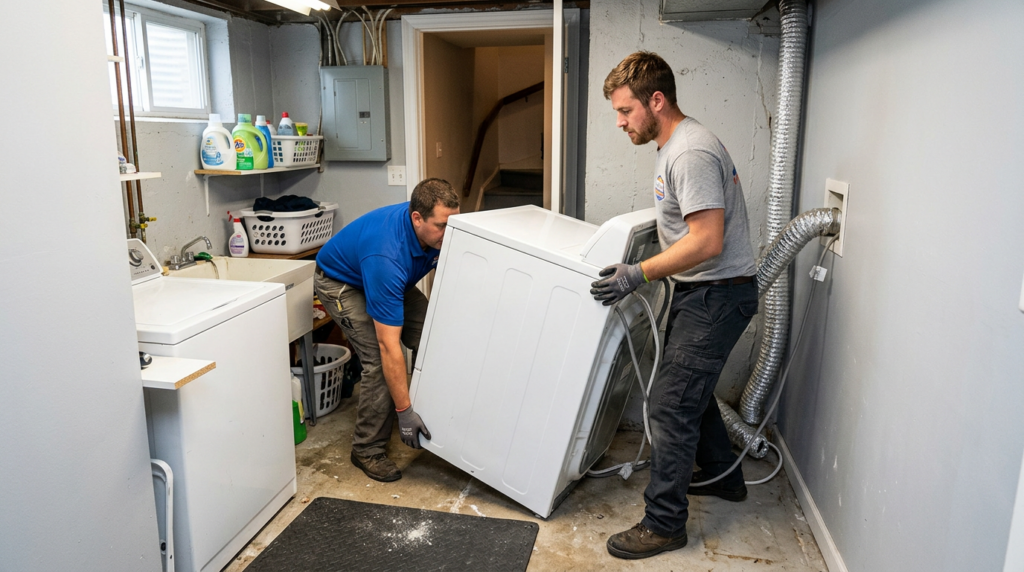
Anyone who’s ever wrestled a dryer up a narrow basement staircase knows the feeling. The machine weighs more than expected, the corners are tighter than they looked, and somewhere around the third step, regret sets in.
For homeowners across Lansing, this scenario plays out constantly, and it’s one of the most common calls Lansing Junk Removal receives. Washer and dryer removal from a cramped basement laundry area isn’t just heavy lifting—it’s a puzzle involving geometry, safety, and a bit of patience. The good news? With the right preparation, the job goes smoother than most people expect.
Why Basement Dryers Are So Tricky To Remove
Basements were rarely designed with appliance removal in mind. Many Lansing homes, especially the older ones near downtown and in the Eastside neighborhoods, feature staircases that are steep, narrow, or both. Some turn at a sharp angle halfway up. Others have low overhead clearance that forces movers to tilt the machine at awkward angles.
A standard dryer weighs anywhere from 100 to 170 pounds. That’s manageable on flat ground with a dolly, but stairs change everything. Add in a doorway that’s barely 30 inches wide, a handrail that eats into the passage, and a water heater parked right beside the laundry setup, and suddenly a simple removal becomes a genuine challenge.
Preparing The Dryer Before It Moves An Inch
Rushing straight to the lifting stage is where most DIY removals go wrong. A little prep work prevents damage to the home and injury to the people doing the carrying.
Disconnect Everything Safely
Electric dryers should be unplugged from the 240-volt outlet before anything else happens. Gas dryers require more caution—the gas supply valve needs to be shut off completely before the flexible connector is detached. Anyone who smells gas or feels unsure about the connection should stop and call a professional. It’s not worth the risk.
Detach The Vent Hose
The vent hose is usually secured with a clamp at the back of the machine. Loosening it takes seconds, but leaving it attached and yanking the dryer forward can tear the ductwork or damage the wall connection. Years of lint buildup often spills out here, so keeping a trash bag handy saves a mess.
Clear The Escape Route
Before lifting anything, the entire path from the laundry area to the exit should be walked and cleared. That means moving laundry baskets, detergent shelves, rugs, and anything else that could trip someone carrying 150 pounds of awkward metal. Doors should be propped open, and pets should be secured in another room.
Getting A Dryer Up Narrow Basement Stairs
This is where the real work happens, and it’s the stage where planning pays off most.
Measure First, Lift Second
Measuring the dryer’s dimensions against the staircase width, doorway openings, and ceiling clearance saves enormous frustration. Sometimes a dryer that won’t fit upright will clear the passage when tilted on its side. In extreme cases, removing the dryer door or the staircase handrail buys the extra inch or two needed.
Use The Right Equipment
A stair-climbing hand truck with straps is the single most valuable tool for this job. It lets one person control the weight while a second person guides from below. Furniture sliders help move the machine across the basement floor without gouging the concrete or scratching tile. Work gloves with good grip are non-negotiable—sweaty hands and heavy appliances are a dangerous combination.
Two People Minimum
Nobody should attempt to haul a dryer up basement stairs alone. The person on the lower end bears most of the weight, so the stronger lifter belongs there. Slow, communicated movements beat speed every time. Taking a break halfway up a staircase isn’t really an option, so both people should be honest about their limits before starting.
What Happens To The Dryer Afterward
Getting the machine out of the basement is only half the battle. Old dryers can’t simply go to the curb in most municipalities, and Lansing has specific guidelines for appliance disposal.
Responsible disposal matters more than many people realize. Dryers contain recyclable steel, copper wiring, and electronic components that shouldn’t end up in a landfill. The EPA’s Responsible Appliance Disposal program outlines how proper recycling recovers valuable materials and keeps harmful substances out of the environment. A reputable junk removal company will handle this step, taking the appliance to a certified recycling facility rather than dumping it.
Some scrap yards in the Lansing area accept dryers, though homeowners still face the problem of transporting a bulky appliance without a truck. Donation is another option when the machine still works—local charities and resale shops sometimes accept functioning appliances, though pickup availability varies.
When Calling A Professional Makes Sense
Plenty of homeowners handle small hauls on their own, and there’s nothing wrong with that. But certain situations tip the scales toward hiring help.
- Gas connections that feel unfamiliar or corroded
- Staircases with tight turns, low ceilings, or damaged steps
- No second person available to share the load
- Back problems, knee issues, or any physical limitation
- No truck or trailer to haul the appliance away
Professional junk haulers deal with tight basements every week. They arrive with the right equipment, carry proper insurance, and handle the disposal end completely. What might take a homeowner an entire exhausting Saturday takes an experienced two-person crew about twenty minutes.
For Lansing residents staring down at an old dryer in a basement corner and dreading the climb, Lansing Junk Removal is happy to take the whole headache off their hands—stairs, disposal, recycling, and all. One phone call, and that stubborn appliance is somebody else’s problem.