
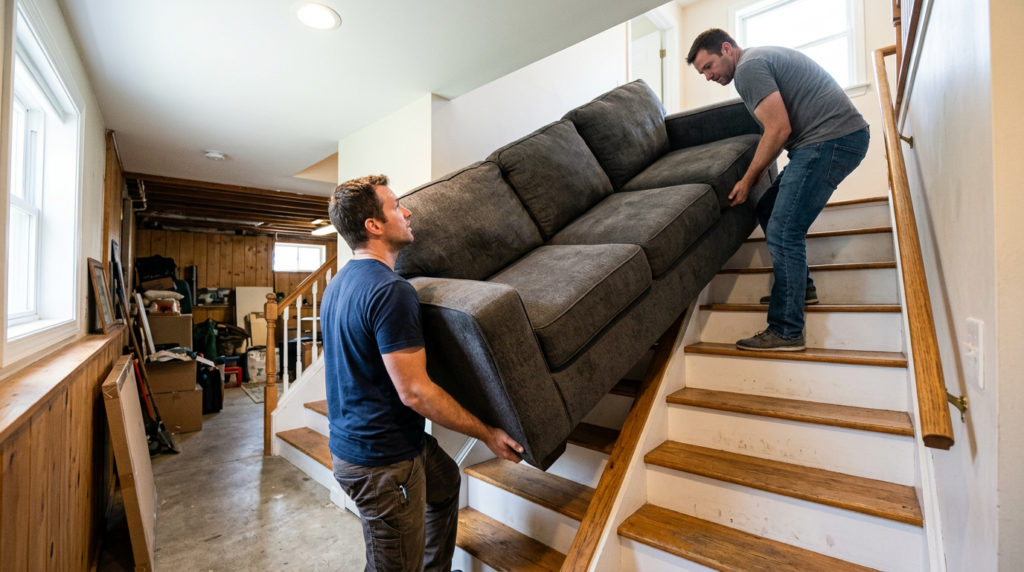
Every homeowner in Lansing has heard a version of this story. Someone finishes a basement, hauls a big comfy couch down the stairs while the drywall is still open, and years later realizes that same couch has become a permanent resident. The stairs got framed in, a wall went up, or the couch simply won’t pivot the way it did on the way down. Now it’s sagging, stained, or just plain outdated, and it won’t budge. That’s when sofa removal stops being a weekend project and starts being a genuine puzzle.
The good news is that no couch is truly stuck forever. The team at Lansing Junk Removal has pulled sectionals out of Michigan basements in just about every way imaginable, and there’s always a path forward. Here’s how a trapped basement sofa actually gets out of the house.
Why Basement Couches Get Stuck In The First Place
Most people assume that if a couch went down the stairs, it should come back up the same way. That logic feels right, but it rarely holds up. A few common culprits change the math:
- Finished stairwells. Drywall, handrails, and trim added after the couch went down can shave off precious inches of clearance.
- Tight turns and landings. Older Lansing homes often have narrow stairwells with a 90-degree turn at the bottom. A couch that slid straight down before a wall existed can’t make that turn now.
- Swollen or reupholstered furniture. Foam expands over time, and some couches were reupholstered with thicker padding, making them bulkier than the day they arrived.
- Low ceiling height. Basement ceilings under seven feet leave almost no room to tilt and rotate a full-size sofa.
Whatever the reason, the couch isn’t going to shrink. Something has to give, and it’s usually the couch.
Options To Try Before Cutting The Couch Apart
Before anyone reaches for a saw, a few less drastic approaches are worth attempting.
Remove Everything That Comes Off
Cushions, legs, and the back frame on some models can be detached. Legs alone can free up four to six inches, which is sometimes all it takes. Recliners and sleeper sofas often have backs that unbolt or slide off a bracket. It’s a five-minute check that saves a lot of grief.
Try A Different Angle
Couches move through tight spaces best when stood on end and “hooked” around corners in a J-shaped motion. Two people, moving slowly, can sometimes thread a sofa through a stairwell that looked impossible. Furniture sliders and moving straps help here, and so does patience.
Look For Another Exit
Walkout basements, oversized egress windows, and exterior stairwells are all fair game. Removing a window sash or a door from its hinges can open up a surprising amount of space. Plenty of couches have left Michigan basements through a window that nobody considered until the stairs failed.
When Disassembly Becomes The Right Call
If the couch still won’t fit, cutting it down is the practical answer. It sounds extreme, but for a sofa headed to disposal anyway, there’s no downside. Here’s how professionals approach it:
- Strip the upholstery. The fabric and foam come off first, usually with a utility knife, exposing the wooden or metal frame.
- Cut the frame into sections. A reciprocating saw makes quick work of a wood frame. Metal frames take longer but still yield to the right blade.
- Bag and carry. Once broken down, the pieces go up the stairs in manageable loads instead of one impossible slab.
A word of caution for the DIY crowd. Sleeper sofas hide heavy steel mechanisms and springs under tension, and cutting into them blindly can cause injury. Anyone attempting this at home should wear gloves and eye protection, work in a ventilated space, and keep kids and pets far away from the mess. When in doubt, this is exactly the kind of job a junk removal company handles daily.
What Happens To The Couch Afterward
A couch that leaves in pieces obviously heads for disposal, but an intact sofa in decent shape deserves a second look. Local donation outlets like Habitat for Humanity ReStore accept gently used furniture, and the proceeds support affordable housing projects. Reputable haulers sort what they collect, donating usable items and recycling metal frames and wood whenever possible. Curbside dumping, on the other hand, can earn a homeowner a fine in Lansing, so it’s never worth the shortcut.
Why Hiring A Pro Beats Fighting The Stairs Alone
Basement couch removal is heavy, awkward work with real risks. Pinched fingers and thrown-out backs are the mild outcomes. Gouged drywall, snapped handrails, and cracked stair treads are the expensive ones. A professional crew shows up with the tools, the muscle, and the experience to know within a few minutes whether a couch can be maneuvered out whole or needs to come apart.
There’s also the matter of the truck. Even after the couch clears the stairs, it still has to go somewhere, and most sedans aren’t up to the task. Full-service haulers handle the lifting, the loading, the disposal fees, and the cleanup in a single visit, often the same day someone calls.
For anyone in the Lansing area staring down a basement sofa that won’t cooperate, Lansing Junk Removal offers free, no-obligation estimates. One phone call, and that stubborn couch becomes somebody else’s problem. The basement gets its floor space back, nobody’s back gets wrecked, and the couch finds its way to a donation center or recycler instead of the curb. That’s a better ending than another decade of walking around it.