
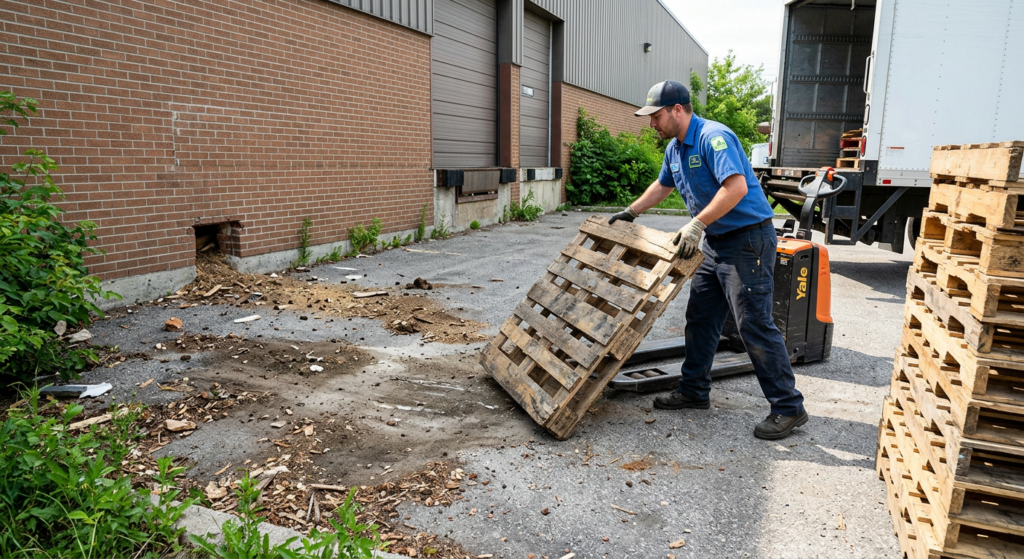
Stacked wood pallets behind a warehouse might look harmless, but any experienced junk hauler in Lansing will tell a different story. Those piles are prime real estate for mice, rats, termites, and a whole cast of unwelcome guests. Lansing Junk Removal has cleared thousands of pallets from loading docks, storage yards, and back lots across mid-Michigan, and the pattern is hard to miss. Where pallets sit, pests move in. That’s exactly why wood pallet removal deserves a spot on every facility manager’s maintenance checklist.
Why Pallets Attract Pests In The First Place
Pallets check nearly every box on a rodent’s wish list. The gaps between deck boards create shaded, protected tunnels. Stacked pallets multiply those hiding spots into a multi-level shelter that stays dry, dark, and undisturbed for weeks or months at a time. Add a nearby dumpster or a break room door that gets propped open in the summer, and the food source is covered too.
Insects find pallets just as inviting. Untreated wood absorbs moisture from rain and snowmelt, and damp lumber is a welcome mat for carpenter ants, termites, and powderpost beetles. Once wood starts to soften and rot, the problem accelerates. Spiders, roaches, and wasps follow shortly after, drawn by the shelter and the smaller insects already living there.
The Michigan Weather Factor
Lansing’s climate makes things worse. Freeze-thaw cycles crack pallet boards and open up new crevices. Spring rains soak the wood, and humid summers keep it from ever fully drying out. By fall, rodents are actively hunting for warm places to spend the winter, and a pallet pile against a building wall is one of the first spots they’ll check.
The Real Cost Of Ignoring A Pallet Pile
A few pallets stacked out back rarely feel urgent. The trouble is that pest problems don’t announce themselves until they’ve already taken hold. By the time droppings show up inside or an employee spots a mouse in the stockroom, the population outside has usually been growing for months.
For businesses, the fallout goes beyond the ick factor:
- Health code violations. Restaurants, food distributors, and grocery operations face inspection failures and potential shutdowns when rodent evidence is found.
- Damaged inventory. Mice chew through packaging, wiring insulation, and stored goods. Insects can contaminate product outright.
- Structural damage. Termites and carpenter ants that start in a pallet pile don’t always stay there. A building sitting ten feet away is an easy next stop.
- Reputation hits. One bad review mentioning pests can undo years of goodwill with customers.
The EPA’s guidance on preventing rodent infestations lists removing outdoor clutter and debris as one of the most effective prevention steps a property owner can take. Pallets fall squarely into that category.
How Professional Pallet Removal Breaks The Cycle
Getting rid of the pallets removes the shelter, and removing the shelter is the single most reliable way to keep pests from settling in. Traps and bait stations treat the symptom. Hauling away the habitat treats the cause.
Eliminating Nesting Sites Before Winter
Timing matters. Rodents in mid-Michigan start scouting winter shelter as early as September. Businesses that schedule pallet hauling in late summer or early fall cut off that migration before it starts. A clean lot in October means far fewer surprises in January.
Reducing Moisture And Wood Rot Near The Building
Pallets sitting directly on soil or asphalt trap moisture underneath, creating the damp conditions wood-destroying insects need. Clearing them out lets the ground dry and removes the food source termites and beetles depend on. It also makes it easier for pest control technicians to inspect the perimeter, since there’s nothing blocking their view of the foundation.
Improving Sightlines For Early Detection
An open, uncluttered lot has another advantage. Burrows, droppings, and gnaw marks are visible right away instead of hiding behind a wall of stacked wood. Maintenance crews can spot trouble early, when it’s still cheap to fix.
What Businesses Can Do Between Pickups
Even companies that receive pallets constantly can keep pest pressure low with a few habits:
- Store pallets at least 18 inches off the ground and away from exterior walls.
- Rotate stock so no single stack sits untouched for more than a few weeks.
- Keep pallet storage areas away from dumpsters and food waste.
- Schedule regular removal instead of waiting until the pile becomes unmanageable.
Recurring service works well for warehouses, retailers, and manufacturers who accumulate pallets faster than they can offload them. A standing monthly or quarterly pickup keeps the pile from ever reaching the size where pests take notice.
Why Lansing Businesses Trust A Local Hauler
Lansing Junk Removal handles commercial pallet removal for businesses throughout the greater Lansing area, from single-stack cleanups to full lot clearouts. The crew shows up on schedule, loads everything, and sweeps the area clean, so there’s no leftover debris for pests to nest in. Whenever possible, pallets are recycled or repurposed rather than sent to a landfill, which keeps disposal responsible and keeps usable wood in circulation.
Pest prevention doesn’t have to start with an exterminator. Sometimes it starts with a truck, a strong back, and an empty lot where the pallet pile used to be. Businesses ready to close the door on rodents and insects can reach out to Lansing Junk Removal for a free quote and get that pile gone before the next generation of pests moves in.