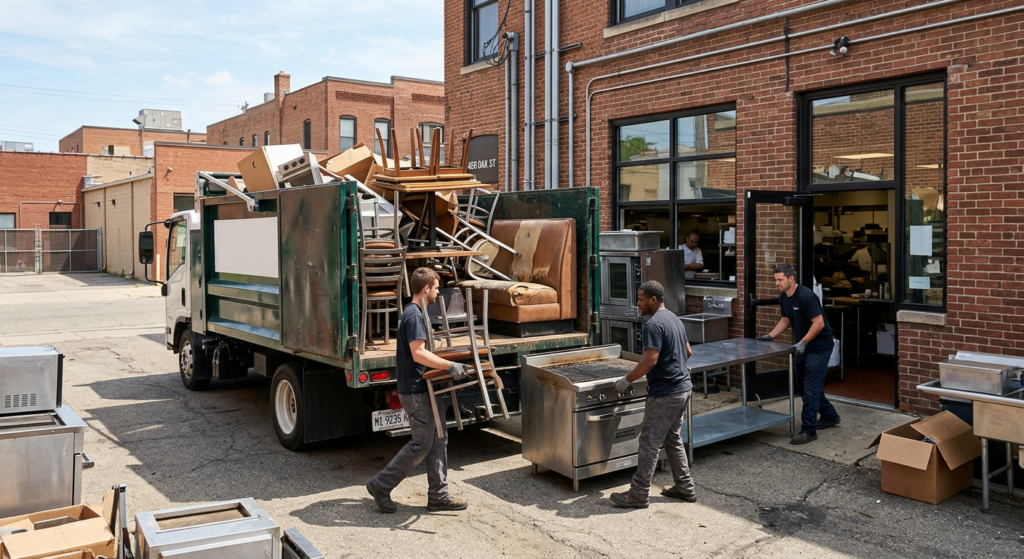
Restaurant owners in the Lansing area know that renovations, upgrades, and equipment failures happen more often than most people expect. When a dining room gets a facelift or the kitchen finally gets that new line of equipment, someone has to deal with what’s left behind. That’s where commercial junk removal services come into play, and after years of hauling old fryers, broken chairs, and mismatched tables out of local eateries, there’s a lot to share about how this process actually works.
Why Restaurants Accumulate So Much Junk During Upgrades
Running a restaurant means constantly adapting. Menus change, trends shift, and equipment wears out faster than most owners would like. Unlike a typical office cleanout, restaurant renovations often involve heavy, awkward items that aren’t exactly easy to move through a back door or narrow hallway.
Tables get scratched up, chairs wobble after years of daily use, and kitchen equipment eventually stops meeting health code standards or simply breaks down beyond repair. Owners upgrading their space often underestimate how much stuff piles up during a renovation project. Old booths, broken bar stools, dented steel prep tables, and outdated walk-in cooler shelving can turn a simple remodel into a logistical headache.
Common Items Restaurants Need Hauled Away
- Dining tables and chairs no longer matching a new aesthetic
- Commercial ovens, fryers, and grills that have reached the end of their lifespan
- Walk-in cooler and freezer components
- Broken or outdated kitchen equipment removal candidates like mixers and dishwashers
- Booth seating, bar stools, and banquettes
- Shelving units, prep stations, and stainless steel counters
The Challenges of Removing Heavy Commercial Equipment
Moving a walk-in cooler or a commercial oven isn’t like tossing out a broken office chair. These items are heavy, bulky, and often wedged into tight spaces that weren’t designed with easy removal in mind. Restaurant kitchens are notorious for narrow doorways and tight turns, which makes hauling large equipment out a genuine challenge without the right tools and experience.
There’s also the safety factor. Old fryers can still have grease residue, refrigeration units might contain refrigerants that need proper handling, and sharp edges on damaged equipment pose real risks to anyone without the right protective gear. A restaurant owner trying to handle this alone, or relying on staff who have better things to do, often ends up spending more time and money than expected.
Disposal Regulations Restaurant Owners Should Know
Certain kitchen equipment falls under specific disposal guidelines, especially anything involving refrigerants or electronic components. The Environmental Protection Agency outlines standards for responsible recycling and disposal that apply to plenty of commercial kitchen items, and staying compliant keeps a business from facing unnecessary fines or environmental liability.
How Professional Junk Removal Saves Restaurant Owners Time
Every hour a restaurant spends dealing with old furniture or broken equipment is an hour not spent serving customers or preparing for reopening. Time is money in this industry, maybe more than in most others. A dining room that’s out of commission for an extra week because nobody could figure out how to get rid of forty old chairs is a dining room that’s losing revenue.
Hiring a crew that specializes in restaurant furniture disposal means the whole process gets handled quickly and without the owner needing to lift a finger. A team shows up, removes everything efficiently, and leaves the space ready for new flooring, paint, or equipment installation. That kind of turnaround matters when a grand reopening date is already circled on the calendar.
What a Typical Removal Day Looks Like
Most jobs start with a walkthrough to identify everything that needs to go. From there, the crew brings in equipment like dollies and furniture straps to safely move heavier pieces. Tables get disassembled if needed, chairs get stacked and loaded, and old kitchen appliances get carefully maneuvered out without damaging doorframes or flooring. Once everything’s loaded up, the space gets swept and left ready for the next phase of the renovation.
Sustainable Disposal Options for Old Restaurant Items
Not everything pulled out of a restaurant needs to end up in a landfill. Plenty of old furniture and equipment still has life left in it, and donating usable items or recycling scrap metal keeps waste out of the trash stream while helping other businesses or nonprofits at the same time.
Stainless steel equipment often gets recycled through metal recyclers, while gently used tables and chairs sometimes find new homes with smaller cafes, community centers, or charity organizations. A good eco friendly junk hauling partner will sort through what’s collected and make sure as much as possible avoids the dumpster altogether.
Benefits of Choosing Sustainable Disposal
- Reduces landfill waste from bulky commercial items
- Supports local charities and smaller businesses through furniture donations
- Keeps scrap metal out of general waste through proper recycling channels
- Helps restaurants build a reputation as environmentally conscious businesses
What Restaurant Owners Should Look For in a Junk Removal Company
Not every hauling service understands the unique demands of commercial kitchens and dining spaces. Restaurant owners should look for a company with experience handling heavy equipment, proper insurance coverage, and flexibility around business hours. Late-night or early-morning removal often works better for restaurants that need to stay open during the day, so scheduling flexibility matters quite a bit.
Pricing structure is another consideration. Some companies charge based on volume, while others price by the truckload or by weight. Getting a clear quote upfront avoids surprises once the work is finished. A trustworthy company will walk through the space, explain the pricing, and answer questions honestly before any work begins.
Questions Worth Asking Before Hiring
- Does the company have experience with commercial kitchen equipment specifically?
- Are they insured in case of property damage during removal?
- Can they work around a restaurant’s operating hours?
- Do they offer recycling or donation options for usable items?
Keeping Renovation Timelines on Track
Restaurant renovations already involve juggling contractors, suppliers, and staff schedules. Adding junk removal to that list shouldn’t create another bottleneck. Scheduling a hauling crew early in the renovation process, rather than as an afterthought, keeps everything moving smoothly and prevents old furniture from sitting around taking up space that contractors need.
A lot of restaurant owners in the Lansing area have learned that coordinating removal before demolition or installation begins makes the whole project run faster. It’s a small detail that saves a surprising amount of hassle down the line, and it’s one of the reasons working with a local, experienced hauling team pays off during a renovation.