Moving large furniture out of your home can feel like navigating a minefield. One wrong move and you’re looking at scuffed walls, scratched floors, or worse—a trip to the emergency room. At Lansing Junk Removal, the team has seen it all: doorframes chipped beyond repair, hardwood floors gouged by dragging sofas, and backs thrown out by ambitious DIY removal attempts.
The good news? Getting rid of bulky furniture doesn’t have to be a destructive nightmare if you know what you’re doing.
Planning Your Furniture Exit Strategy
Before anyone touches that old sectional, taking measurements is non-negotiable. Grab a tape measure and check the width, height, and depth of the furniture piece. Then measure every doorway, hallway, and stairwell it needs to pass through. This sounds obvious, but you’d be surprised how many people skip this step and end up wedging a loveseat halfway through a doorframe.
Remove any detachable parts first. Legs often unscrew from sofas and tables. Cushions come off. Some furniture backs can be taken down with just a few bolts. The more you can break down a piece, the easier the removal becomes. This is especially true for couch removal, where bulky arms and backs create most of the clearance issues.
Clear a path through your home before the heavy lifting starts. Move smaller items out of the way, roll up rugs that might cause slipping, and open all doors wide. If you have pets or small children, get them safely out of the area. The last thing anyone needs during a furniture move is an unexpected obstacle or distraction.
Protecting Your Home During The Move
Professional junk removal services don’t show up empty-handed, and neither should you. Protective materials make all the difference between a smooth removal and costly home repairs.
Floor Protection Methods
Hardwood, tile, and laminate flooring scratches easily under the weight of sliding furniture. Lay down moving blankets, cardboard sheets, or specialized furniture sliders along the entire route. These inexpensive items distribute weight and create a buffer between furniture and flooring. For extra protection on hardwood, consider using old towels or blankets under the cardboard.
Wall And Doorframe Safety
Corners are furniture’s worst enemy—or maybe it’s the other way around. Wrap furniture edges with moving blankets and secure them with stretch wrap or tape. For your walls, removable padding can be taped to corners and doorframes in high-risk areas. Pool noodles cut lengthwise and taped to doorframes work surprisingly well and cost next to nothing.
Door removal makes a huge difference. Most interior doors lift right off their hinges in seconds, instantly giving you several extra inches of clearance. This simple step prevents the common scenario of trying to squeeze furniture through at awkward angles that scrape both the door and the furniture.
Lifting Techniques That Prevent Injury And Damage
Proper lifting isn’t just about protecting your back—though that’s obviously important. The right technique also gives you better control over large items, reducing the chance of dropping them or banging them into walls.
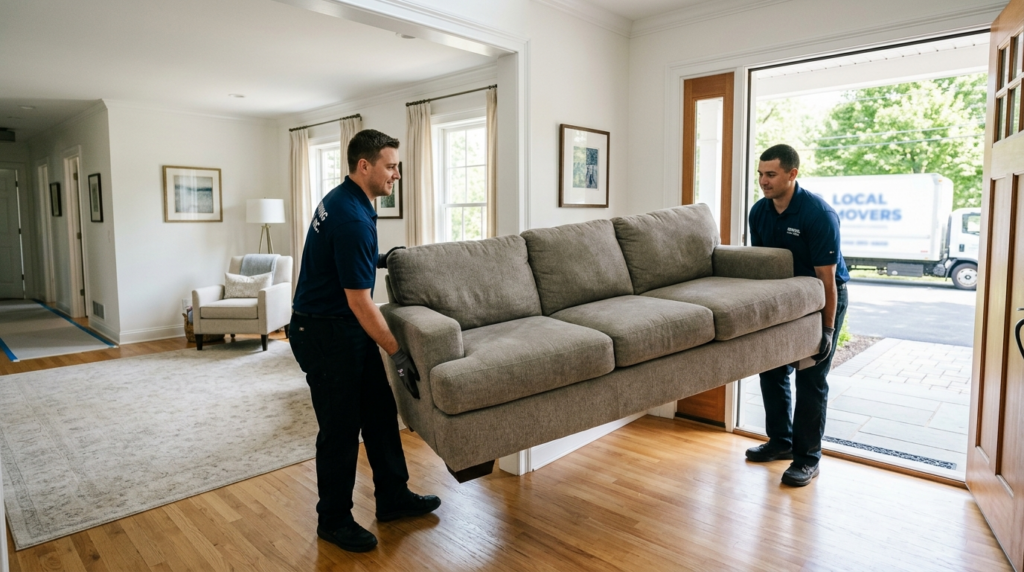
Always lift with your legs, keeping your back straight and the load close to your body. Get a firm grip on the furniture before lifting, and communicate clearly with anyone helping you. Designate one person as the leader to call out directions. “Ready, lift on three” prevents the common problem of one person lifting while the other isn’t prepared.
For sofa removal, the “hook method” works wonders. Tilt the couch so it’s standing on one end, then maneuver it through doorways in an L-shape. This technique uses the vertical space in doorways that often goes to waste when trying to push furniture straight through. The same principle applies to mattresses, bookcases, and other tall items.
When Stairs Are Involved
Stairs multiply the difficulty and risk factor exponentially. The person at the bottom bears most of the weight, so put your strongest helper in that position. Take breaks on landings—don’t try to muscle through the entire staircase in one go. Rushing leads to mistakes, and mistakes on stairs can mean serious damage or injury.
Sliding furniture down stairs might seem easier, but it’s actually more dangerous. You lose control quickly, and the momentum can cause the piece to crash into walls or hurt someone. Keep furniture lifted and take it one step at a time.
Why Professional Removal Makes Sense
DIY furniture removal works fine for small items and short distances. But when dealing with heavy sectionals, antique armoires, or multi-story moves, calling professionals isn’t admitting defeat—it’s being smart.
Professional junk removal teams bring specialized equipment like furniture dollies, lifting straps, and protective materials. They also carry insurance, which matters more than most people realize. If something goes wrong during a professional removal—a dent in the wall, a scratch on the floor—their insurance covers it. When you’re doing it yourself and something breaks, you’re paying out of pocket for repairs.
Experience counts for a lot in this business. The team at Lansing Junk Removal has removed thousands of furniture pieces from Michigan homes. They’ve dealt with narrow Victorian hallways, steep basement stairs, and every furniture configuration imaginable. That expertise means they spot potential problems before they happen and know the tricks that make supposedly impossible removals actually doable.
Time is another factor people underestimate. What seems like a quick Saturday morning project often stretches into an all-day ordeal. Professional removal teams get the job done in a fraction of the time, freeing you up for literally anything else. Plus, they handle the disposal, saving you from the hassle of figuring out where and how to get rid of bulky items. The EPA provides guidelines on proper furniture disposal and recycling that professionals follow as standard practice.
Common Furniture Removal Mistakes To Avoid
Some mistakes show up so often they’re practically universal. Learning from others’ errors saves you from repeating them.
Underestimating weight ranks as the number one problem. That sofa might not look that heavy, but upholstered furniture can weigh several hundred pounds. Sleeper sofas with built-in mattresses weigh even more. Don’t attempt to move heavy furniture alone, even if you consider yourself strong.
Skipping the protection step because you’re “being careful” backfires constantly. Everyone thinks they’ll be careful enough, but furniture has sharp corners and hard edges. One slight bump against a wall while you’re struggling with a heavy load creates damage. Take the five minutes to wrap edges and protect floors.
Forcing furniture through tight spaces causes most of the serious damage. If it’s not fitting, forcing it won’t help—you’ll just tear up your walls and possibly damage the furniture too. Try different angles, remove more parts, or take off doors. If none of that works, call someone who has the tools and knowledge to handle it.
Ignoring building restrictions applies especially to apartment and condo dwellers. Many buildings have specific moving hours, require elevator reservations, or mandate the use of service elevators. Check your building’s rules before removal day to avoid conflicts with management or neighbors.
Frequently Asked Questions
How Much Does Professional Couch Removal Typically Cost?
The cost for professional couch removal in the Lansing area generally ranges from $75 to $200, depending on the sofa’s size, location within the home, and disposal requirements. Sectionals and sleeper sofas cost more due to their weight and complexity. Most reputable companies provide free estimates and transparent pricing without hidden fees. The price includes removal from wherever the couch currently sits, hauling it away, and proper disposal or recycling. When comparing costs, remember that DIY removal might seem free but carries risks of injury, property damage, and the time investment of doing it yourself.
Can Furniture Be Removed Through Windows If It Doesn’t Fit Through Doors?
Window removal is definitely possible and sometimes necessary for oversized furniture pieces. Ground-floor windows present the easiest option, though first and second-story removals can also work with the right equipment and safety precautions. Professional removal services have the straps, padding, and expertise to safely lower furniture from upper floors. Never attempt upper-floor window removal without proper equipment and multiple helpers—the risk of dropping the furniture or losing control is extremely high. Sometimes removing window frames entirely provides the extra inches needed, though this requires careful reinstallation afterward. The decision to use window removal depends on comparing the difficulty and risk against other options like disassembling the furniture more completely or removing interior doorframes.